
21 Passive Income Ideas You Can Start With Little Money
The idea of earning money without constantly trading your time for it sounds appealing. But passive income is often misunderstood.
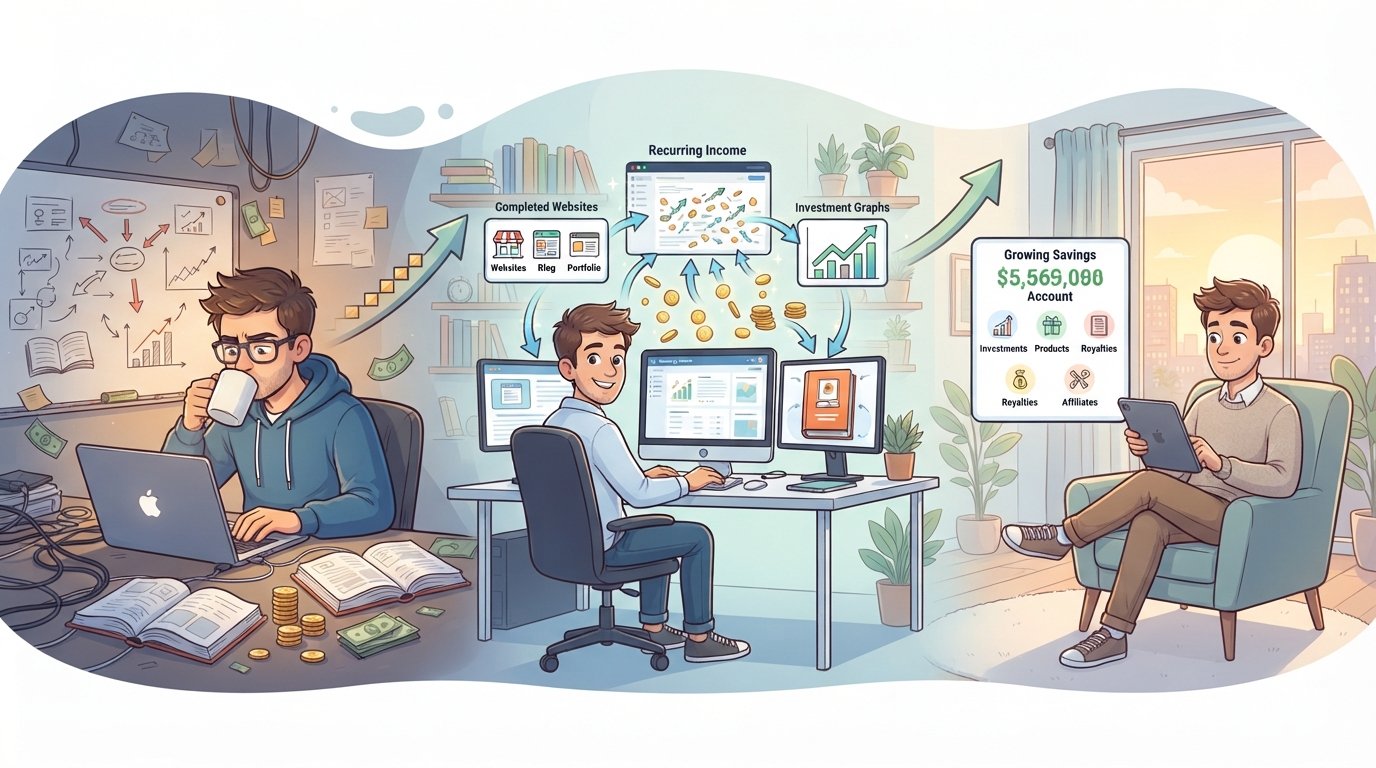
Despite what social media posts may suggest, most passive income does not begin passively. You usually need to invest time, money, knowledge, or creativity before an income stream can become relatively low-maintenance.
The good news is that you don’t necessarily need thousands of dollars to get started.
Some passive income ideas can be built with a laptop, an internet connection, and a useful skill. Others require a small upfront investment and patience before they begin producing meaningful results.

In this guide, we’ll look at 21 passive income ideas you can start with little money, along with what each idea involves and what to consider before investing your time or cash.
What Is Passive Income?
Passive income is money generated from an asset, product, investment, or system that doesn’t require you to perform the same amount of active work for every dollar earned.
For example, if you create a digital template once and sell it repeatedly, you may continue earning from that product without recreating it for every customer.
However, passive doesn’t mean effortless.
A successful passive income stream may require:
- Upfront research
- Initial creation work
- Marketing
- Customer support
- Maintenance
- Occasional updates
- Financial investment
Think of passive income as building an asset rather than simply completing another task for money.
1. Create and Sell Digital Templates
Digital templates can be inexpensive to create and distribute.
You could create:
- Budget spreadsheets
- Meal planners
- Resume templates
- Study planners
- Business checklists
- Project trackers
- Social media calendars
Once a useful template is finished, you can sell copies without physically producing anything.
The key is solving a specific problem. A generic spreadsheet may struggle to attract attention, while a carefully designed monthly budget template for young families could target a much clearer audience.
2. Build a Niche Website
A website can become a long-term digital asset.
You could create content around a focused subject such as:
- Personal finance
- Saving money
- Home organization
- Career development
- Software tutorials
- Hobbies
As your website attracts visitors, potential revenue sources can include advertising, affiliate marketing, digital products, or sponsored content.

This approach usually takes patience. Search traffic rarely appears overnight, so think of a website as a long-term project rather than a quick income source.
3. Start Affiliate Marketing
Affiliate marketing allows you to earn a commission when someone purchases a product or service through your referral.
You don’t necessarily need a large audience to begin.
A useful approach is to focus on a narrow topic and create content that helps people make purchasing decisions.
For example, instead of creating a website about “everything related to money,” you could focus on budgeting tools for beginners.
Your content could compare different products, explain how they work, and disclose when links are affiliate links.
4. Publish an Ebook
If you know how to explain a subject clearly, an ebook can become a reusable digital product.
Your ebook doesn’t have to be hundreds of pages long.
A focused guide such as:
“A Beginner’s Guide to Building a Monthly Budget”
could be more useful than a huge book covering dozens of unrelated financial topics.
Spend time making the information accurate, practical, and easy to follow.
5. Create an Online Course
An online course can turn knowledge into a reusable product.
You might teach:
- Spreadsheet skills
- Photography
- Writing
- Graphic design
- Personal budgeting
- Coding
- Language skills
The initial course creation process can take considerable effort, but once the material is complete, students can access it without you personally teaching every lesson.
Keep the course focused on one transformation rather than trying to teach everything you know.
6. Sell Stock Photos
If you enjoy photography, you can license photographs through stock-media platforms.
Useful commercial subjects can include:
- Workplaces
- Technology
- Food
- Travel
- Business concepts
- Lifestyle scenes
The advantage is that one photograph can potentially generate multiple licensing sales.
The challenge is volume and discoverability. One or two photographs are unlikely to create substantial income, so building a useful portfolio matters.

7. License Music or Sound Effects
Musicians and audio creators can potentially earn from licensing their work.
You could create:
- Background music
- Short sound effects
- Podcast music
- Ambient recordings
- Video-game sounds
Once uploaded to an appropriate marketplace, individual tracks may continue generating licensing revenue.
Quality and originality are particularly important because buyers need audio they can legally use.
8. Design Print-on-Demand Products
Print-on-demand allows you to create designs that are printed on products when customers place orders.
Possible products include:
- T-shirts
- Mugs
- Posters
- Notebooks
- Phone cases
You don’t have to purchase a large inventory upfront.
The difficult part is developing designs that people actually want. A successful store usually requires experimentation, good product descriptions, and an understanding of its target audience.
9. Create a YouTube Channel
YouTube can eventually become an income-producing asset through advertising, sponsorships, affiliate marketing, memberships, or your own products.
However, videos aren’t passive when you’re producing them every week.
A more passive approach is to create evergreen content that can remain useful for months or years.
Examples include:
- Tutorials
- Educational explanations
- Software guides
- How-to videos
- Product education
Older videos can continue attracting viewers if they remain relevant.
10. Build a Faceless Content Channel
You don’t necessarily have to appear on camera to create educational content.
A faceless channel could use:
- Screen recordings
- Narration
- Animations
- Presentations
- Original illustrations
For example, a channel could explain personal-finance concepts using simple animated graphics.
The important distinction is originality. Simply recycling other people’s videos, articles, or recordings isn’t a sustainable content strategy.
11. Create a Paid Newsletter
A newsletter can become a recurring digital product if you consistently provide information people find valuable.
Possible niches include:
- Career advice
- Industry research
- Personal finance education
- Technology
- Investing education
- Productivity
You could begin with free content and later introduce a premium version containing deeper research, tools, or exclusive material.
The biggest asset isn’t the newsletter software — it’s the trust of your readers.
12. Develop a Simple Digital Tool
If you have technical skills, creating a small online tool can become a digital asset.
Examples include:
- Budget calculators
- Mortgage calculators
- Savings calculators
- Invoice generators
- Productivity tools
- Planning tools
A simple tool that solves one annoying problem can sometimes be more useful than a complicated platform.
You can monetize a tool through advertising, subscriptions, premium features, or related products.
13. Create a Mobile App
A mobile app can generate revenue through subscriptions, advertising, purchases, or paid downloads.
You don’t necessarily need to build a massive social network.
A small utility can be enough.
For example, you could create an app that helps users track subscriptions, organize expenses, or calculate savings goals.
The challenge is maintenance. Apps may require updates as operating systems, devices, and user expectations change.
14. Rent Out an Asset You Already Own
Passive income doesn’t always have to happen online.
If you already own something useful, you may be able to rent it.
Depending on local laws and demand, examples could include:
- Parking space
- Storage space
- Equipment
- Camera gear
- Tools
- Recreational equipment
The economics depend heavily on your location, insurance requirements, maintenance costs, and demand.
Don’t assume rental revenue equals profit. Always account for expenses.
15. Invest in Dividend-Paying Stocks
Investing can provide income through dividends, although dividends are not guaranteed and stock prices can fall.
The basic idea is that you own shares in companies that distribute part of their profits to shareholders.
Before investing, understand:
- Dividend yield
- Company financial health
- Dividend history
- Diversification
- Investment fees
- Tax implications
- Risk of losing capital
Investment income should be approached differently from a small online side project because your invested capital is at risk.
16. Consider Broad-Market Funds
Instead of selecting individual companies, some investors prefer diversified funds that hold many securities.
Broad-market funds can provide exposure to a large number of companies through a single investment.
They can also be useful for long-term wealth building, although they are not risk-free and their value can decline.
If you consider this approach, research the fund’s:
- Expense ratio
- Holdings
- Investment strategy
- Historical behavior
- Tax treatment
Your location also matters because investment products and tax rules differ between countries.
17. Create and Sell Spreadsheet Tools
If you’re good with Excel or Google Sheets, you can turn that skill into reusable products.
Examples include:
- Debt payoff trackers
- Budget planners
- Business expense trackers
- Savings calculators
- Freelance income trackers
- Project-management sheets
A spreadsheet becomes more valuable when it saves the buyer time or helps them make a difficult task easier.
18. Sell Design Assets
Graphic designers can create reusable assets such as:
- Icons
- Presentation templates
- Fonts
- Illustrations
- Social-media templates
- Website graphics
Instead of being paid only for individual design projects, you create an asset that can potentially be sold multiple times.
This can make digital design libraries an interesting long-term business model.
19. Create a Membership Resource Library
A membership website can provide recurring revenue in exchange for access to valuable resources.
For example, a finance-focused website could offer:
- Budget templates
- Financial checklists
- Calculators
- Educational guides
- Monthly resources
Unlike a one-time product, memberships require ongoing value. If subscribers stop finding the library useful, they may cancel.
20. License Your Original Designs
If you’ve created artwork, illustrations, patterns, photographs, or other original creative work, you may be able to license those designs.
Licensing can allow another company to use your work under agreed terms while you receive payment.
Read licensing agreements carefully. Understand exactly what rights you’re giving away, for how long, and in which markets.

21. Build a Portfolio of Small Income-Producing Assets
You don’t necessarily need one huge passive income source.
A different approach is to build several smaller assets over time.
For example:
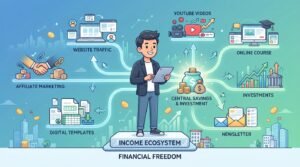
Website → Digital products → Affiliate content → Email newsletter → Calculator/tool
Each asset can support the others.
A website can introduce people to your digital products. A calculator can attract search traffic. An email list can bring readers back when you publish something new.
This creates a small ecosystem instead of depending entirely on one income stream.
How Much Money Do You Need to Start?
The answer depends on the idea.
Some options can be started with almost no financial investment, while others require meaningful capital.
For example:
| Idea | Typical starting requirement |
|---|---|
| Digital templates | Time + basic software |
| Blog | Domain + hosting |
| eBook | Writing + publishing tools |
| YouTube | Phone/computer + time |
| Affiliate marketing | Content + website/platform |
| Stock photography | Camera + editing skills |
| Online course | Knowledge + recording tools |
| Digital tools | Technical skills or development budget |
| Dividend investing | Investment capital |
| Rental assets | Existing asset + operating costs |
The most important resource isn’t always money.
Time is also an investment.
Someone with $100 and 200 hours available has different opportunities from someone with $10,000 and very little free time.
How to Choose the Right Passive Income Idea
Don’t choose an idea simply because someone online claims it makes a lot of money.
Ask yourself five questions:
1. What can I already do?
Starting with an existing skill can reduce your learning curve.
2. What problem can I solve?
People generally pay for outcomes, convenience, information, entertainment, or access.
3. Can the result be reused?
The closer an asset gets to “create once, sell many times,” the more scalable it may become.
4. What will it cost to maintain?
A business that requires constant paid advertising or daily work isn’t truly passive.
5. Can I stick with it for a year?
Many income ideas fail because people abandon them before they have enough time to develop.
https://hamzaft.com/7-credit-card-mistakes-that-keep-you-poor-without-you-realizing-it/
Passive Income Mistakes to Avoid
Expecting instant money
Passive income usually takes time to build.
If someone promises guaranteed income with almost no work or risk, be skeptical.
Spending too much before testing an idea
You don’t need an expensive website, premium software, and a large advertising budget to validate every idea.
Start small where possible.
Copying what’s already popular
A successful business model isn’t automatically a successful business for you.
Look for an underserved audience or a specific problem you can solve better.
Ignoring taxes and expenses
Revenue isn’t the same as profit.
Consider platform fees, taxes, software subscriptions, advertising, payment processing, maintenance, and other expenses.
Putting all your money into one investment
Investment-based passive income carries risk. Diversification and understanding your risk tolerance matter.
Conclusion
The best passive income ideas aren’t necessarily the ones promising the biggest returns.
A better question is:
What asset can I build today that could continue providing value tomorrow?
For one person, that might be a digital product. For another, it could be a website, investment portfolio, online course, useful tool, or collection of licensed creative work.
Start with something you understand, keep the initial costs manageable, and test the idea before investing heavily.
Most importantly, remember that passive income is usually front-loaded work. You build the asset first; the potential for lower-maintenance income comes later.
If you focus on creating something genuinely useful rather than chasing the latest “easy money” trend, you’re giving yourself a much stronger foundation for long-term income.
https://www.sofi.com/learn/content/low-cost-side-hustles/
1 thought on “21 Passive Income Ideas You Can Start With Little Money”